Congressional Floor Summary

The Congressional Floor Summary is a (mostly) daily briefing on U.S. House and Senate floor activity — bills scheduled, votes taken, nominations pending, and the legislative horizon ahead — produced by Lens and Mix, LLC using AI-assisted research, updated on days Congress is in session.

This is an experimental, strictly non-partisan publication. It reports legislative activity across both parties as a factual record, without commentary or advocacy. Because it is AI-assisted, it may contain errors and should not be treated as an official or definitive legislative record — always verify critical details against official sources such as Congress.gov, the Senate Daily Digest, and the House Majority Leader's schedule.

Not affiliated with the U.S. Congress, any federal agency, or any political party. Questions, corrections, or suggestions are welcome: CongSum@LensAndMix.com

Congressional Floor Summary — July 17, 2026
119th Congress · 2nd Session
Congressional Floor Summary
House & Senate · Daily Legislative Report
Curated and produced by Lens and Mix, LLC using AI-assisted research
Friday, July 17, 2026 Week of July 13 · Week in review · Budget resolution floor vote expected next week
Independent, non-partisan, AI-assisted summary from Lens and Mix, LLC · Not an official government publication · Sourced from House Majority Leader, Senate Daily Digest, Congress.gov, GovTrack.us, and current reporting · Verify all legislative status at official sources before relying on it.
Actions ⚡ House Live Floor ⚡ Senate Floor 📊 GovTrack
The address delivered less than billed: ~25 minutes of familiar claims plus declassified documents that reviews found largely restate a known 2021 assessment — closing with an appeal to pass the SAVE Act. No emergency declared, no machines decertified
Recon 3.0's blueprint advanced 20–14 on party lines — four committees instructed to draft $95B by Sept. 11, ~$10B of it election-related — but the floor vote planned next week does not yet have the votes, and Thune calls the path "very uneven"
The thin-majority week in numbers: Jones 46–44, Schwartz 50–45, Kuntz 51–46, and a 49–48 cloture vote Thursday — the tightest yet. The Older Americans Act reauthorization passed in wrap-up
One concrete post-address dispute: Michigan officials push back on DOJ plans to deploy federal election monitors for the August primary. Iran strikes ran a sixth consecutive day; H.R. 8595's Senate strip fight awaits
In session Urgent / deadline Context / note
Where things stand: The week closes on a presidential address that landed softer than advertised and a reconciliation blueprint that cleared its first gate without a clear path through its second. In his ~25-minute East Room address Thursday night, the President said newly declassified documents reveal "shocking vulnerabilities in our election infrastructure" — alleging Chinese influence efforts, voting-machine weaknesses, and noncitizens on voter rolls — and mocked officials who called 2020 "the most secure election," alleging "deep state" cover-ups, though he did not repeat the claim that he won. He closed by urging Congress to pass the SAVE America Act. The reviews that followed were pointed: CNN's examination found the documents "largely discuss previously known potential vulnerabilities" contained in a 2021 intelligence assessment; NPR noted the address offered no new evidence of a single fraudulent vote; Sen. Warner called the claims "totally bogus," citing the intelligence community's unanimous finding that China "did not even try to change a single vote" in 2020. Election officials privately expressed relief that the feared steps — an emergency declaration, machine decertification — did not come ("He said nothing, basically," one told CNN). Broadcasters split: ABC, NBC, and CNN declined to air it live; CBS cut away; Fox carried it in full. One concrete dispute did emerge: Michigan officials publicly objected to DOJ plans to deploy federal election monitors for the state's August primary. Meanwhile the Reconciliation 3.0 blueprint advanced 20–14 on strict party lines — instructing the Administration, Agriculture, Armed Services, and Intelligence Committees to draft up to $95 billion by September 11, roughly $10 billion of it for SAVE-related election measures, with no offsets required and no Ways and Means instructions (no tax provisions). The floor vote leaders want next week does not yet have the votes: Rep. Roy — a declared critic of the unoffset spending — was absent for the markup, and Majority Leader Thune was blunt about the Senate: reconciliation is "a risky proposition... It is a very uneven path. I can't make any guarantees over here." The resolution also carries no Senate instructions, meaning a second House vote would follow any Senate amendment. The Senate's week ended as it ran throughout — on razor margins: Kuntz confirmed 51–46 Wednesday, a 49–48 cloture vote Thursday (the week's tightest, with the Westercamp Court of International Trade nomination queued behind it), and the Older Americans Act reauthorization (S. 2120) passed in wrap-up. The Iran strikes ran a sixth consecutive day; Thune's NDAA motion to reconsider and the incoming H.R. 8595 — the State appropriations bill carrying the SAVE Act — await the chamber next week, alongside the Intelligence Committee's scheduled vote on Clayton. We report the claims, the reviews, the votes, and the calendar — and distinguish among them.
What changed since the last edition:
  • The address happened — and the feared escalations did not. Familiar claims plus declassified documents that reviews found largely restate a 2021 assessment; no emergency, no decertification, no new fraud evidence; a closing SAVE Act appeal (RNC chair Gruters echoed it). The concrete follow-on is administrative: DOJ election monitors planned for Michigan's August primary, which state officials call unwarranted.
  • Recon 3.0 cleared committee 20–14 after 14 Democratic amendments were rejected — but the full-House vote targeted for next week lacks committed votes, Roy skipped the markup, Cassidy and other Senate fiscal hawks want offsets, and Thune declined to make "any guarantees." Committee instructions run to September 11, past the August recess.
  • Kuntz was confirmed 51–46 (party line) Wednesday — the fourth judicial confirmation of the return — and Thursday produced a 49–48 cloture vote, the week's narrowest margin. The Older Americans Act reauthorization passed by unanimous consent in Thursday wrap-up.
  • The week's ledger, complete: the blockade broken (215–211), the SAVE-carrying H.R. 8595 passed (217–209), the Israel-aid watershed (104–314), the NDAA blocked (50–46), two hearings held, one senator buried and his sister seated. Next week: the budget-resolution floor vote, the Clayton committee vote, and the Senate's answer to H.R. 8595 — the House's last scheduled legislative week before August.
🗓 Legislative Horizon
Major initiatives expected in the weeks ahead & remainder of the 119th Congress (ends Jan 3, 2027)
Imminent Coming weeks Later this session
Now — stalled FY2027 NDAA & the SAVE America Act — Rule Defeated; Bill Stalled to July 13
On June 30 the House rejected the rule (H. Res. 1398) to bring up the ~$1.15T FY2027 NDAA (H.R. 8800), 198–224, with 14 Republicans joining all Democrats. The rule would have "MIRVed" the SAVE America Act onto the NDAA for transmission to the Senate; hardliners led by Rep. Luna wanted the voter-ID language in the bill text instead, while others cited a Delphi-pension amendment and a promised border-security bill. The defeat stalled the defense bill and sent the House into an early July 4 recess. The underlying knot is the SAVE Act: it has passed the House but is stuck in the Senate short of 60 votes, so the House keeps trying to attach it to must-pass vehicles — the same dynamic holding up the housing signature and §702. When the House returns July 13, leadership must find a new path for the NDAA; a reconciliation-based route for the voter-ID provisions is also being floated. Meanwhile the Senate has opened a second track: cloture is filed on the motion to proceed to its own FY2027 NDAA (S.4784) for the July 13 return. Senate NDAA cloture FAILED 50–46 (reconsider pending); House NDAA parked. The SAVE fight moved to the funding track: the State approps bill arrives in the Senate with the SAVE Act merged in — a strip fight looms.
Resolved — now law Housing Law — Enacted July 11 Without a Signature; Implementation Runs Through States and Localities
Resolved: the 21st Century ROAD to Housing Act became law at 12:00 a.m. July 11, when the Article I, Section 7 window expired with no signature and no veto — the become-law-by-inaction path this briefing tracked from the June 24 ceremony cancellation onward. Forward questions now shift to implementation: much of the law operates through state and local adoption (land-use incentives, permitting reform, grant steering), and analysts expect measurable supply effects in years rather than months. Politically, both parties claim the win heading into the midterms, with Democrats emphasizing that the President refused to sign it and the White House framing the non-signature as SAVE Act leverage. ENACTED 12:00 a.m. July 11 — no signature, no veto, law by constitutional default. Implementation through states/localities; effects measured in years. Both parties claim the win.
Now — succession South Carolina Senate Seat — Appointment and Sprint Special Primary
Sen. Graham's death sets two clocks running. Gov. McMaster can appoint a temporary successor at his discretion — President Trump says he has a preferred name but is withholding it ("it's too soon with Lindsey") — and, because Graham had already won his primary for the November ballot, state law appears to require a compressed special primary to choose a new Republican nominee. Reported filing dates (July 21–28) may conflict with the federal 45-day overseas-ballot requirement, an unresolved wrinkle. Rep. Nancy Mace says she is "strongly considering" a run; the Democratic nominee is pediatrician Annie Andrews. Until an appointee is seated, the Senate operates with 99 members and Republicans two short of full strength when Sen. McConnell's continued hospitalization is counted. Nordone appointed and sworn in July 14 (serves to Jan. 2027; not a primary candidate). Special primary Aug. 11 (runoff possible Aug. 25); filing July 21–28. Norman, Mace, Fry, Evette circulating; Andrews is the Democratic nominee.
Now — lapsed FISA Section 702 — Lapsed; Congress Recesses With No Fix
Section 702 has been lapsed since midnight June 12 — the first expiration in its history — and both chambers have now recessed without resolving it. No reauthorization vehicle reached the floor during the House's return week. Bill Pulte remains acting DNI, the figure Democrats most object to; the Warner bill to address DNI vacancies (S.4876) was blocked by a Cotton objection on June 24; and Trump continues to condition any §702 reauthorization on passage of the unrelated SAVE America Act — the same demand he just attached to the housing-bill signing. The near-term operational effect of the lapse still looks limited: the March 2026 FISC certifications grandfather existing collection until roughly March 2027, and providers remain compelled to comply with directives already in force. With Congress out until mid-July, no movement is possible until it returns. Congress recessed with §702 still lapsed; next window mid-July. Cushioned to ~March 2027. Warner's DNI-vacancy bill (S.4876) blocked by Cotton. SAVE-Act condition persists.
This week Reconciliation 3.0 — $350B Pentagon + SAVE Act
The third reconciliation attempt is now concrete and smaller: a ~$95 billion framework — defense funding, farm aid, and grants for states to implement voter-ID requirements — unveiled July 15, with the House Budget Committee markup July 16. The voter-ID grants are the indirect route around the parliamentarian's ruling that the SAVE Act itself is reconciliation-ineligible, and a response to the no-funding critique Tillis raised. Headwinds: the Senate Budget Committee lost its chairman with Graham's death, House conservatives want offsets, and reporting calls this the last realistic reconciliation window before the midterms. A June attempt by Sen. Graham to attach the SAVE Act to the reconciliation package fell short of even a simple majority (Tillis, Collins, Murkowski, and McConnell voting no). Blueprint advanced 20–14 (July 16); floor vote sought next week WITHOUT votes in hand. Instructions to four committees, $95B by Sept. 11, ~$10B election-related, no offsets. Thune: "very uneven path... no guarantees."
Ongoing Iran — Symbolic Resolution Passed; Binding One Failed
The Iran war powers effort split into two tracks. On June 23 the Senate adopted the House-passed concurrent resolution 50–48 — symbolic, not presented to the President, no force of law. The next day, June 24, the Senate took up the joint resolution (S.J.Res.185) — the version that would carry legal force — and rejected the motion to proceed 47–50 (1 present). So Congress has registered formal disapproval of the Iran campaign, but the legally binding mandate fell short. Trump called the June 23 crossover Republicans "losers"; a tense June 24 Capitol lunch reportedly saw Sen. Cassidy confront him over the Iran framework. The ceasefire has collapsed: after Iranian attacks on tankers in the Strait of Hormuz July 6–7, U.S. strikes resumed July 7 and the naval blockade is reinstated. The July 10 War Powers letter claims a fresh 60-day window — a position Schiff's new resolution (with Kaine, Kim, Merkley, and Van Hollen) challenges as having "no foundation in law." Congress's existing record — one adopted concurrent resolution, binding measures defeated in both chambers, the Lebanon resolution's 189–235 failure — now meets live hostilities and a guaranteed privileged floor vote. The ~$88B supplemental request ($67B defense) is the money side of the same fight, and the resumed war is the stated engine of the Senate NDAA blockade. WAR WIDENING: sixth day of strikes, now reaching northern Iran; Tehran hitting Gulf allies; blockade reinstated. July 10 letter claims a new 60-day clock; Schiff resolution pending. ~$88B supplemental unresolved.
Now — 2026 midterms Supreme Court VRA Ruling — Louisiana v. Callais (6–3)
The Court’s 6–3 ruling in Louisiana v. Callais (April 30) gutted Section 2 of the Voting Rights Act as applied to majority-minority district mandates. Florida enacted a new map; Alabama, Tennessee, and others moved through special sessions; Louisiana’s attempt to delay its primary for redistricting drew legal challenges. Estimates suggest up to 19 additional Republican-leaning House seats could be drawn by 2028, though the Purcell doctrine limits changes close to the November 2026 election. Congressional Democrats have no legislative path to a fix with the current majorities. The ruling will shape redistricting through the 2030 census. Maps shifting in multiple states. Up to ~19 R-leaning seats possible by 2028. Purcell limits 2026 changes.
By Sept. 30 FY2027 Appropriations
The new fiscal year begins October 1, 2026. All 12 appropriations bills must pass by September 30 to avoid a shutdown. Senate Appropriations (Collins/Murray) are working 302(b) toplines with markups planned after July 4; the House Transportation-Housing ("THUD") appropriations subcommittee markup is set for July 14, full committee July 17. The $350B Pentagon reconciliation demand complicates the defense topline — leadership must decide whether war/Pentagon funding flows through reconciliation or the regular bills. After this session’s shutdown history, another continuing resolution or shutdown is a realistic risk. Hard deadline Sept. 30, 2026. Pentagon topline fight ahead. CR or shutdown a live possibility.
Coming months Trump vs. the Senate Parliamentarian
Trump has twice in five weeks demanded Thune fire Senate Parliamentarian Elizabeth MacDonough over her rulings keeping the SAVE Act out of reconciliation. Thune is resisting, calling the targeting "concerning" — overruling or replacing her would set a precedent future majorities could exploit and would cost institutionalist votes (Collins, Murkowski, McConnell). The standoff is a recurring flashpoint that will resurface with every reconciliation and Byrd Rule fight, including Recon 3.0. Institutional norms vs. results pressure. Resurfaces on every Byrd Rule dispute.
Later in session Debt Ceiling
Treasury has been operating under extraordinary measures. The debt-limit runway depends on what fiscal vehicles move this year — a reconciliation package carrying a debt-limit increase would extend it, while inaction makes the ceiling a separate crisis point. Projections have pointed to a potential X-date around late 2026 or early 2027. Worth tracking as Recon 3.0 and appropriations develop. Timing depends on whether a debt-limit increase rides on a moving vehicle. Potential X-date late 2026/early 2027.
Fall 2026 2026 Midterm Elections — Session Deadline
The 119th Congress ends January 3, 2027; all bills not enacted by then expire. The November 3, 2026 midterms decide the 120th Congress. Republicans hold a narrow House majority (roughly 218–215 with vacancies) and a 53–47 Senate (two independents caucus with Democrats). Trump-backed primary challengers have ousted incumbents Cornyn and Cassidy, reshaping the GOP caucus. The effective legislative window narrows by late summer as campaign season dominates. Effective window closes by ~September 2026. Primary purges reshaping the GOP caucus.
119th Congress · 2nd Session · Week in review · House's final legislative week before August begins Monday
After the Address: No Emergency, No New Evidence — and a $95B Blueprint Without the Votes
The election address restates known material and closes on a SAVE Act appeal · Recon 3.0 advances 20–14 but the floor math is unresolved · Kuntz confirmed 51–46; a 49–48 cloture vote caps the thin-majority week · H.R. 8595's Senate strip fight looms
20–14
Recon 3.0 blueprint advances; floor votes not yet in hand
49–48
Thursday's cloture vote — the week's tightest margin
Republican lead Democrat lead Bipartisan Deadline Active Completed Contested
H
U.S. House of Representatives
Speaker: Rep. Mike Johnson (R-LA) · Majority Leader: Rep. Steve Scalise (R-LA) · In session · Budget Committee marks up Recon 3.0 today
H.R. 8595 — FY2027 State/national-security appropriations (passed 217–209)
The Blockade Breaks: SAVE Act Merges Into the State Bill Bound for the Senate Third FY2027 approps bill passed
R
Tuesday: The rule passed 215–211 — Rep. Fine the only Republican no — ending the floor freeze that began June 30; Luna and Burchett flipped after Johnson agreed to MIRV the SAVE Act onto the appropriations bill Wednesday: The State Department/national-security appropriations bill passed 217–209 (one Democrat for; one Republican against); the rule directs the Clerk to merge the SAVE Act in at engrossment The condition: Luna: attach it to "all the appropriation bills and all must-pass bills... If John Thune strips it out in the Senate that will be on him"
The maneuver that failed on June 30 succeeded on July 14 — with the target changed to what is now confirmed as H.R. 8595. Rather than tying the SAVE Act to the NDAA, leadership merged it with the State Department funding bill, and the holdouts took the deal: Luna on her stated condition that the tactic extend to every must-pass vehicle, Burchett with "we need to just keep pounding the Senate," and other Freedom Caucus members on commitments toward a border-security package. The appropriations bill itself — the House's third for FY2027 — passed the next day, and the combined measure now heads to a Senate that reporting uniformly expects to strip the election provisions, which is the confrontation the hardliners say they want on the record. The House also passed a bill making daylight saving time permanent, and the FY2027 Agriculture bill remains in the queue. Johnson did not bring the NDAA back this week; the defense bill stays parked at its failed rule while the SAVE fight rides the funding track instead.
Rule — adoption (Tue)
215–211 · adopted
State approps — passage (Wed)
217–209 · passed
Massie amendment — Israel aid (to the State approps bill)
Failed 104–314 — but 103 Democrats, a Caucus Majority, Vote to Cut Off Aid Leadership divided; a first
D
The vote: Failed 104–314, with 10 voting present — 103 Democrats plus Massie in favor; 98 Democrats against The split at the top: Jeffries and Aguilar voted no ("overly broad"); Whip Clark and former Speaker Pelosi voted yes — Pelosi: "while this amendment is ill-conceived, I vote yes for the message that it sends" The shift: A similar measure drew 37 Democratic votes two years ago; Gallup finds Democratic sympathies now running 65–17 toward Palestinians
The amendment — barring the bill's funds from use for Israel and cutting $3.3 billion in Foreign Military Financing — was never expected to pass; Massie was its only Republican vote. Its significance is the Democratic ledger: for the first time, a majority of the House Democratic caucus voted to block military aid to Israel, with the leadership itself split and members on both sides calling the vehicle flawed — Clark voting yes while objecting that it swept in humanitarian funds, Jeffries voting no while calling for "more decisive ways" to change policy toward "the far-right Netanyahu government," and Progressive Caucus chair Casar declaring the milestone itself the point. Sen. Fetterman answered from the other chamber that he would leave the party if it "turns its back on Israel." The vote lands amid the resumed Iran war and the Senate's Israel-provisions objections to the NDAA — one more measure of how the alliance politics beneath this Congress's national-security agenda are moving.
Massie amendment — adoption
104–314 · failed
Reconciliation 3.0 — the $95B framework · H.R. 8800 NDAA (parked)
Blueprint Advances 20–14 — but the Floor Vote Next Week Lacks the Votes Committee instructions run to Sept. 11
R
The framework: Roughly $95 billion — defense funding, farm aid, and grants for states to implement voter-ID requirements — a fraction of the ~$350B Pentagon package once demanded The markup: Advanced 20–14 on strict party lines, rejecting 14 Democratic amendments; Rep. Roy — a critic of the unoffset spending — did not vote, having left for district flooding The instructions: Administration, Agriculture, Armed Services, and Intelligence Committees to draft up to $95B by September 11 — ~$10B of it SAVE-related — with no offsets required, no tax provisions, and no Senate instructions The NDAA: Still parked at its failed June 30 rule; leadership did not bring it back this week
The blueprint cleared its first gate on party lines, but every signal beyond the committee room points to trouble. Leaders want a full-House vote next week — the chamber's last scheduled legislative week before August — and reporting is direct that the votes are not yet there: fiscal conservatives object that the $95 billion carries no offsetting cuts (Roy, a Budget and Rules member, skipped the markup), while the September 11 drafting deadline concedes that no bill can pass before the recess. The Senate outlook is harder still: Majority Leader Thune called reconciliation "a risky proposition... a very uneven path. I can't make any guarantees over here," caught between defense hawks who want more than the blueprint allows and spending hawks (Cassidy among them) who want it paid for — with the Budget Committee that would steer it still lacking a chairman after Graham's death. And because the resolution carries no Senate instructions, any Senate action would force the House to vote again. Ranking member Boyle's critique framed the other party's message: 47 pages "and not one word on bringing down costs." The voter-ID implementation grants (~$10B) remain the design's heart — the indirect route around the parliamentarian's ruling and the answer to Tillis's no-funding critique.
S
U.S. Senate
Majority Leader: Sen. John Thune (R-SD) · Minority Leader: Sen. Chuck Schumer (D-NY) · In session · Working majority: 52 (McConnell recovering)
S.4784 — FY2027 NDAA · cloture on the motion to proceed
Cloture Fails 50–46: Democrats Block the Defense Bill Over the Resumed War Motion to reconsider pending; re-vote possible
D
The vote: Cloture on the motion to proceed failed 50–46 (3:38 p.m.) — every Democrat present voted no; Thune switched to "no" solely to enter a motion to reconsider. Not voting: Fetterman, Justice, McConnell, Padilla Stated reasons: The unauthorized, resumed Iran war (Schumer: "a permission slip"; Murphy: "a war-funding authorization bill"); provisions deepening U.S.–Israel military and intelligence cooperation (a six-senator letter); and the ~$1.5T total defense topline The bill: ~$1.1T DOD, $41B DOE nuclear, $11B other; 3.6% troop pay raise; reported from Armed Services 18–9 — itself an unusually partisan margin for the NDAA
The vote Thune called "unprecedented... a new low" leaves the annual defense bill — enacted every year for more than six decades, and passed 77–20 just last year — blocked at its opening gate. The mechanics matter: this was cloture on the motion to proceed, so the Senate has refused even to begin debating the bill, with Democrats seeking guaranteed amendment votes to contest the war before allowing it forward; a coalition of civil-liberties and antiwar groups urged exactly that condition. Thune's vote switch preserves a motion to reconsider, so the test can be rerun if the arithmetic changes. The Senate NDAA remains blocked as the House's own defense bill sits parked — and now a new House gambit heads this way: the State appropriations bill passed Wednesday arrives with the SAVE Act merged in, and reporting uniformly expects the Senate to strip it, the confrontation Rep. Luna says she wants on the record ("If John Thune strips it out in the Senate that will be on him"). The chamber thus faces the SAVE Act attached to a funding bill and a defense bill blocked over the war — the two disputes now sharing one floor.
Cloture — motion to proceed to S.4784
50–46 · failed (60 required)
War powers — the resumed conflict and the disputed clock
The Iran War Formally Resumes; Trump's Letter Claims a Fresh 60 Days — Schiff Files to Stop the Clock New war powers resolution filed
B
The facts: Iran attacked neutral-flagged tankers in the Strait of Hormuz July 6–7; U.S. strikes resumed July 7 and have run several consecutive nights; the naval blockade is reinstated The letter: Dated July 10, to President Pro Tempore Grassley — strikes are "limited, measured," no ground forces; the administration treats it as opening a new 60-day window after its May 1 letter declared the original hostilities "terminated" The response: Schiff's new war powers resolution (with Kaine, Kim, Merkley, Van Hollen): the 60-day claim "has no foundation in law." Massie: the war "never stopped"
The war powers fight that shaped June's votes has reopened on new facts. The administration's position is that Iran's tanker attacks breached the June 17 memorandum of understanding, ending the ceasefire that its May 1 letter said had "terminated" hostilities — and that the July 10 notification therefore starts a fresh statutory clock. The critics' position is that a president cannot end a war on paper and restart the timeline at will — and some, like Massie, argue operations never actually ceased, so the original clock never stopped. This is the same unresolved constitutional question behind June's three failed-or-symbolic resolutions, now with live strikes attached: Congress's formal record so far consists of one adopted concurrent (non-binding) resolution and defeated binding measures in both chambers. Schiff's privileged resolution guarantees this returns to the floor. The dispute is also now materially entangled with the legislative calendar — it is the stated engine of the NDAA blockade and colors the ~$88B supplemental request. The war itself widened overnight: U.S. strikes reached a sixth consecutive day and expanded to northern Iran, while Tehran again struck U.S.-allied Gulf states and the reinstated blockade shows no sign of reopening the strait. Thursday night's presidential address drew on declassified 2020-election material from the DNI's office — the same office whose acting occupant the Intelligence Committee's ranking member wants replaced "as soon as possible," and whose permanent nominee the committee votes on next week; reviews found the released documents largely restate a 2021 assessment, and Warner called the claims "totally bogus."
Also Tuesday — and today's hearings
The Thin-Majority Week: Kuntz 51–46, a 49–48 Cloture Vote, and Two Nominations at Committee Clayton committee vote next week; Blanche later this month
B
Blanche (AG): Pressed on the Epstein files, the "anti-weaponization" fund, and his past as the President's lawyer ("I'm his lawyer" — corrected to "was"); recused from the three ended Trump cases; on a third term: "I don't believe he is" eligible. Cornyn, sharply critical, is publicly undecided on an 11–10 committee Clayton (DNI): Would say only that Biden was "certified" in 2020; defended subpoenas of New York Times journalists as part of "an ongoing national security investigation"; Warner wants Pulte out of the acting role "as soon as possible" and is undecided on Clayton Next: Blanche witness testimony today (Ashcroft for the majority; fired pardon attorney Elizabeth Oyer for the minority), committee vote later this month; Intelligence votes on Clayton next week
The floor closed the week the way it opened it — on margins with no room. Kuntz's 51–46 confirmation Wednesday made four judicial confirmations since Monday (Jones 46–44, Schwartz 50–45, Kuntz twice at 51–46 for cloture and confirmation), and Thursday's 49–48 cloture vote was the tightest of all, with the Westercamp Court of International Trade nomination queued behind it. The Older Americans Act reauthorization (S. 2120) passed in Thursday wrap-up — the quiet track's steady output. Both marquee nominations now run through needle-thin committees. Blanche's margin is the starker: with Graham's Judiciary seat unfilled, the panel sits at 11–10, and a single Republican defection stalls the nomination — which is why Cornyn's pointed criticism of the "anti-weaponization" fund, and his refusal to commit, mattered more than any Democratic attack. Tillis, by contrast, told Blanche he'd "done a great job today." Clayton's hearing doubled as the first public airing of the intelligence-leadership dispute since §702 lapsed: his originally scheduled appearance was scrapped on the President's order amid the Pulte fight, and Warner's message Wednesday paired an urgent demand to end Pulte's acting tenure with an undecided posture on the nominee meant to replace him. Both committee clocks now run against tonight's presidential address drawing on the DNI office's own declassifications — and against next week's scheduled Intelligence vote. Elsewhere on the quiet track: cloture is filed on the Kuntz nomination, and House-passed appropriations bills wait on the calendar, about to be joined by the SAVE-carrying State bill.
July 2026
Jul 16 Committee / Executive
Recon 3.0 blueprint advances 20–14; Trump's primetime election address restates known material; Senate's tightest vote of the week (49–48)
The House Budget Committee advanced the FY2027 budget resolution 20–14 on strict party lines, rejecting 14 Democratic amendments — instructing the Administration, Agriculture, Armed Services, and Intelligence Committees to draft up to $95B (roughly $10B SAVE-related) by September 11, with no offsets; Rep. Roy did not vote. Thune on Senate prospects: "a very uneven path. I can't make any guarantees." That night the President's ~25-minute East Room address alleged "shocking vulnerabilities" in election infrastructure via newly declassified documents and closed by urging passage of the SAVE Act; reviews found the material largely restated a 2021 assessment, no new fraud evidence was offered, and no emergency or decertification followed. ABC, NBC, and CNN declined to air it live. Michigan officials objected to DOJ plans for federal election monitors at the August primary. On the Senate floor, a 49–48 cloture vote — the week's tightest — advanced a pending nomination, and the Older Americans Act reauthorization (S. 2120) passed in wrap-up. Iran strikes ran a sixth consecutive day.
20–14
Jul 15 Floor
House passes State approps 217–209 (SAVE Act merging in); Massie Israel amendment fails 104–314 as 103 Democrats vote yes; Blanche and Clayton hearings
The House passed the FY2027 State Department/national-security appropriations bill 217–209 — its third funding bill — with the rule directing the SAVE America Act to be merged in at engrossment before transmission to the Senate. During consideration, Rep. Massie's amendment to cut off Israel aid (and $3.3B in Foreign Military Financing) failed 104–314–10, but drew 103 Democratic votes — a caucus majority and a first — with leadership split (Jeffries and Aguilar no; Clark and Pelosi yes). The House also passed a bill making daylight saving time permanent. In the Senate: Blanche (AG) faced Judiciary on the Epstein files and "anti-weaponization" fund with Cornyn publicly undecided on an 11–10 panel; Clayton (DNI) told Intelligence only that Biden was "certified" in 2020 and defended New York Times journalist subpoenas; Warner demanded Pulte's exit from the acting role. The Senate confirmed Jeffrey Kuntz (S.D. Fla.) 51–46 on a party-line vote. House Republicans unveiled a ~$95B Reconciliation 3.0 framework (defense, farm aid, voter-ID implementation grants).
217–209
Jul 14 Floor
House rule passes 215–211, ending the three-week floor blockade
The House adopted the rule 215–211 — Rep. Fine the lone Republican no — breaking the blockade in place since June 30. Speaker Johnson won over Reps. Luna and Burchett by agreeing to merge the SAVE America Act with the FY2027 State Department appropriations bill ("MIRVing"), with Luna conditioning her vote on the tactic extending to "all the appropriation bills and all must-pass bills" and pre-assigning blame to Majority Leader Thune should the Senate strip it. Other holdouts secured commitments on border-security legislation. The rule teed up the State approps bill, a permanent daylight-saving-time measure, and veterans legislation.
215–211
Jul 13 Executive
Iran war formally resumed: July 10 War Powers letter made public; strikes ongoing since July 7
A July 10 letter from the President to Senate President Pro Tempore Grassley, made public July 13, formally notified Congress that U.S. military action against Iran resumed July 7, after Iranian attacks on neutral-flagged tankers in the Strait of Hormuz July 6–7 that the administration says violated the June 17 memorandum of understanding. The letter describes the strikes as "limited, measured," with no ground forces, against missile, air-defense, maritime, and command targets; the naval blockade is reinstated. The administration treats the notification as opening a new 60-day window under the War Powers Resolution — its May 1 letter had declared the original (Feb. 28) hostilities "terminated" — a position Sen. Schiff's newly filed war powers resolution (with Kaine, Kim, Merkley, Van Hollen) disputes; Rep. Massie argues the war "never stopped."
Jul 14 Session
Senate blocks the NDAA 50–46; Schwartz confirmed 50–45; Nordone sworn in
At 3:38 p.m. the Senate rejected cloture on the motion to proceed to S.4784, the FY2027 NDAA, 50–46 — ten short of 60, with every Democrat present opposed and Majority Leader Thune switching to "no" to enter a motion to reconsider (not voting: Fetterman, Justice, McConnell, Padilla). Thune: "unprecedented... a new low." Democrats cited the resumed, unauthorized Iran war (Schumer: "a permission slip"), U.S.–Israel military/intelligence integration provisions, and the ~$1.5T topline. Earlier: Schwartz confirmed 50–45 to the Second Circuit (12:51 p.m.); Darline Graham Nordone sworn in at 2:33 p.m. by President Pro Tempore Grassley, casting her first vote in the NDAA roll; tributes to Graham continued (Ernst, Cotton, Barrasso); House-passed appropriations bills including MilCon-VA (H.R.8469) placed on the Senate calendar under Rule XIV; cloture filed on the Kuntz nomination.
50–46
Jul 13 Session
Congress returns: Graham mourned on the floor; Jones confirmed 46–44; Nordone appointed
Both chambers returned from the July 4 recess. The Senate's first session since Sen. Graham's death opened with his desk — the John C. Calhoun desk — draped in black with white roses; Majority Leader Thune delivered a tearful eulogy ("he has just changed his address"). At 5:30 p.m. the Senate confirmed Arthur Jones (S.D. Tex.) 46–44, the year's narrowest margin, with the majority at its thinnest. At 4 p.m., Gov. McMaster appointed Darline Graham Nordone — Graham's sister — to serve out his term, after President Trump publicly urged the pick; swearing-in set for July 14. The D.C. medical examiner's preliminary finding: aortic dissection. Thune floated the Graham-championed Russia sanctions bill as a memorial ("a great tribute to the legacy of Lindsey"). The House returned to routine suspensions (postal namings, votes 6:30 p.m.). McConnell, recovering, remained away.
46–44
Jul 12 In memoriam
Sen. Lindsey Graham (R-SC) dies at 71; Senate to return with his seat vacant
Graham died Saturday night of "a brief and sudden illness," his office announced Sunday; law-enforcement sources reported no indication of unnatural causes. A four-term senator, four-term House member, and retired Air Force colonel with 33 years in uniform, he was among the chamber's defining defense and foreign-policy voices. Tributes came from Trump ("one of the greatest people and Senators I have ever known"), Bush, Biden, and Netanyahu. Institutional consequences: the Senate returns July 13 with Republicans two short of full strength (Graham vacancy; McConnell hospitalized), affecting the S.4784 NDAA cloture process, the ~$88B supplemental, and the confirmation calendar including Acting AG Blanche's Judiciary hearing. Gov. McMaster will appoint a temporary successor; a sprint special primary appears required for the November ballot line.
Jul 11 Law
The 21st Century ROAD to Housing Act becomes law at midnight — without a signature
The 10-day constitutional window (from the June 29 presentment, Sundays excepted) expired at 12:00 a.m. with no signature and no veto, enacting the housing act by Article I, §7 default. The broadest federal housing law in decades — 47 supply provisions negotiated by Sens. Scott and Warren and Reps. Hill and Waters — took effect with the same force as if signed, ending the standoff that began with the June 24 signing-ceremony cancellation over the SAVE America Act. Johnson: "If he doesn't, it's still law; we'll still celebrate it." Warren: "If you're serious about lowering costs, you don't reject one of the biggest housing bills in years." Lee: "the sooner we pass the SAVE America Act, the sooner President Trump will return to celebratory signing ceremonies."
Law
Jul 10 Executive
Trump declares he will not sign the housing bill; becomes law at midnight absent a veto
On the final day of the 10-day window, Trump posted that he "will not sign the Housing Bill... in PROTEST over the fact that the United States Senate is not capable of passing THE SAVE AMERICA ACT," repeating his demand that the Senate eliminate the filibuster. The White House, asked about a veto, referred back to the post. Absent a veto by midnight, the 21st Century ROAD to Housing Act becomes law without a signature (85–5 Senate; 358–32 House; presented June 29). Speaker Johnson had announced July 5 that the House will pass the SAVE Act "one more time" via reconciliation after the return — a route facing the parliamentarian's prior Byrd Rule ruling. Jeffries: "Republicans would rather make it harder to vote than easier to afford a home."
Jul 7 Update
Housing deadline firmed at July 10; return-week clock comes into focus
No floor action. Fresh reporting firmly places the housing bill's become-law date at July 10 (from the June 29 presentment), settling the deadline discrepancy previously flagged; the bill remains unsigned and not vetoed. Return-week stakes sharpened: the House has two legislative weeks before the August recess, with the NDAA, a third reconciliation package, FY2027 appropriations, and a §702 renewal all pending; the White House supplemental request is now precise at ~$88B ($67B defense, largely Iran-war costs). Luna restated her blockade position ("1,000%, the rule will go down until you attach the SAVE America Act"). Senate pro forma July 9; both chambers return July 13.
Jul 6 Update
Housing endgame week: window closes ~July 10; Trump demands filibuster's end for the SAVE Act
Pro forma day; no floor business. The housing bill remained unsigned over the holiday weekend, with the 10-day window closing on or about July 10; Speaker Johnson said "He won't veto the bill," framing the outcome as a signature or become-law-by-inaction. In his July 4 address and weekend posts, Trump again demanded the Senate eliminate the filibuster to pass the SAVE America Act — a step Senate GOP leaders have ruled out. Also completing the June 30 record: the House passed H.R.7128, the TRIA Program Reauthorization Act, 373–15. Both chambers return July 13.
Jul 3 Update
Recess watch: Tillis calls the SAVE Act "dead"; Trump says he'd "rather not sign anything" first
No floor action; both chambers out until July 13. Sen. Tillis (R-NC) declared the SAVE America Act "dead" and the continued push "theater," arguing it lacks 60 votes and could not be implemented in 50 states before the Nov. 3 midterms (no funding, no instructions; North Carolina's own voter-ID rollout took about a year). Trump, in a CNBC interview, said "I'd rather not sign anything until we signed Save America Act" — leaving the housing bill unsigned as its window runs to on or about July 10. After the Supreme Court upheld counting late-arriving mail ballots (Mississippi), Trump and Sen. Lee renewed calls to pass the SAVE Act. Senate pro formas set for July 6 and 9.
Jul 2 Update
Recess update: June 30 record completed (Lebanon vote); housing window set at ~July 10; Senate queues its NDAA
Pro forma day; no floor business. This edition completes the June 30 record with the Lebanon war powers vote (below), reports the housing bill's now-precise timeline (formally presented June 29; the 10-day window closes on or about July 10, with the bill still unsigned and not vetoed), and notes that cloture has been filed on the motion to proceed to S.4784, the Senate's FY2027 NDAA, for the July 13 return. Senate pro forma sessions set for July 2, 6, and 9.
June 2026
Jun 30 Floor
Lebanon war powers resolution (H.Con.Res.108) defeated 189–235
Shortly after the NDAA rule vote, the House defeated Rep. Tlaib's revised Lebanon war powers concurrent resolution 189–235 (Roll No. 232). The measure directed removal of U.S. forces from hostilities in Lebanon within 7 days, with carve-outs for Lebanese Armed Forces cooperation and embassy protection. It was the second Lebanon war powers vote in a month (H.Con.Res.84 failed 324–91 on June 4). Democratic leadership — Jeffries, Clark, and Aguilar — supported the revised version, but 22 Democrats (including Hoyer) joined 212 Republicans against; Massie and Boebert were the only Republican yes votes. As a concurrent resolution it carried no force of law. (Reported in the July 2 edition.)
189–235
Jun 30 Floor
House rejects NDAA rule 198–224 over SAVE America Act; leaves early for July 4 recess
The House defeated the rule (H. Res. 1398) to bring up the FY2027 NDAA (H.R. 8800), 198–224 (Roll No. 231), with 14 Republicans joining all Democrats. The rule would have "MIRVed" the SAVE America Act onto the ~$1.15T defense bill for transmission to the Senate. Hardliners led by Rep. Luna wanted the voter-ID language in the NDAA's base text; Reps. Turner/Miller/Spartz sought a Delphi-pension amendment ruled out on a point of order; Rep. Roy tied his vote to a promised border-security bill. Majority Leader Scalise switched to "no" to preserve a re-vote option. The defeat stalled the defense bill and froze the floor for a second straight week; leaders sent the House home early, with both chambers now out until July 13. Separately, the House adopted a Massie resolution to release records on lawmaker sexual-misconduct settlements, took up a Massie Israel-funding measure that split Democrats, and passed H.R.7128, the TRIA Program Reauthorization Act, 373–15. The housing bill remained unsigned on the President's desk.
198–224
Jun 29 Update
Interim update: housing bill on the President's desk; pocket veto appears foreclosed
Pro forma session; no floor business. The 21st Century ROAD to Housing Act has been presented to the President and sits unsigned and not vetoed, starting the 10-day presentment clock. Because Congress is holding pro forma sessions rather than adjourning, a pocket veto is generally unavailable — so absent a formal veto, the bill would become law without a signature. A formal (override-eligible) veto remains possible. This edition adds "pocket veto" to the glossary. Congress remains in recess until July 13; FISA §702, the Iran resolutions, and the Pulte/DNI question are unchanged.
Jun 25 Recess
Pro forma session; both chambers in recess until mid-July
No legislative business. The Senate holds pro forma sessions only and next convenes July 13; the House is also out. Today's edition recaps June 24. Outstanding business carried into the break: the housing bill awaits the President's signature (cancelled pending the SAVE America Act), FISA §702 remains lapsed with no reauthorization, and the binding Iran war powers resolution had failed the prior day.
Jun 24 Floor
Trump cancels housing-bill signing; binding Iran resolution fails 47–50; judicial votes
Less than two hours before a scheduled Capitol signing, President Trump cancelled the ceremony for the 21st Century ROAD to Housing Act (passed 85–5 / 358–32), saying he would not sign until Congress passes the unrelated SAVE America Act — the second time in a week he conditioned a GOP priority on it. The Senate rejected the motion to proceed to S.J.Res.185, the binding (joint) Iran war powers resolution, 47–50 (1 present) — a day after the symbolic concurrent version passed 50–48. The Senate invoked cloture on judicial nominee John Marck (S.D. Tex.) 51–46 and set a confirmation vote on Arthur Jones. Warner's UC request to pass S.4876 (DNI vacancies) was blocked by Cotton. Both chambers then recessed to mid-July.
47–50
Jun 24 Briefing
Edition recaps the June 23 Iran war powers and housing votes
Today's edition reports the two confirmed results from June 23: the Senate's 50–48 adoption of the Iran war powers resolution (first to clear both chambers; symbolic concurrent resolution) and final congressional passage of H.R.6644, the 21st Century ROAD to Housing Act (Senate 85–5, House 358–32), now heading to the President. FISA §702 remained lapsed with no confirmed reauthorization vote despite the House's return.
Jun 23 Floor
Senate passes Iran war powers resolution 50–48; House completes housing bill 358–32
The Senate adopted the House-passed Iran war powers resolution 50–48 — the first such measure to pass both chambers (House had passed it 215–208 on June 3). Four Republicans (Cassidy, Collins, Paul, Murkowski) crossed over; Fetterman (D) was the lone Democratic No; absences of McConnell (hospitalized) and McCormick were decisive. As a concurrent resolution it is symbolic and not presented to the President. Separately, the House concurred in H.R.6644 (21st Century ROAD to Housing Act) 358–32 after the Senate's 85–5 passage (Roll Call 182), sending the housing bill to the President. FISA §702 saw no confirmed floor vote.
50–48
Jun 23 Floor
House returns from recess; FISA §702 standstill unbroken (no confirmed floor action)
The House reconvened after its district work period, reopening the possibility of floor action on the lapsed Section 702 authority. As of this edition, no §702 vote or new legislative vehicle had been confirmed for the day. The impasse was unchanged: Pulte acting DNI since June 19 (Democrats insist he must go), the Clayton DNI hearing stalled, and Trump's SAVE-Act condition still attached, which Thune has said lacks the votes. Collection continues under the March FISC certifications to ~March 2027. On the Senate side, a final passage vote on H.R.6644 (housing) had been scheduled for Monday evening; the result was not confirmed in this edition. Published as a known-facts edition pending updates.
Jun 22 Floor
Senate returns to finish the housing bill; House back June 23
The Senate convened at 3:00 p.m. to take up H.R.6644 (21st Century ROAD to Housing Act) post-cloture, with a roll-call vote (~5:30 p.m.) on the motion to concur in the House message with Thune substitute SA 5823, plus the Darrell Owens (OSCE Ambassador) nomination. The House remained in its district work period (final day), set to reconvene June 23. The FISA §702 / Pulte / SAVE-Act standoff was unchanged over the recess; §702 stays lapsed, bridged to ~March 2027.
Jun 18 Nomination
Senate confirms Holding (EBRD) 48–39; rejects S.J.Res.190 motion 46–48
The Senate confirmed George Holding as U.S. Director of the European Bank for Reconstruction and Development, 48–39. It rejected the motion to proceed to S.J.Res.190 (Kaine) — a CRA disapproval of an EOIR rule on Board of Immigration Appeals appellate procedures — by 46–48 (Record Vote 173). By unanimous consent it agreed to H.Con.Res.109 (Salazar), allowing Emancipation Hall for the June 24 time-capsule dedication. Work on H.R.6644 (housing) advanced toward a June 22 final vote.
48–39
Jun 17 Reversal
Trump cancels Clayton DNI hearing, keeps Pulte, ties FISA to voter-ID bill
In a morning post from the G7, Trump called off Jay Clayton's 2 p.m. Senate Intelligence confirmation hearing — saying it won't proceed until Clayton's SDNY successor is confirmed — and confirmed Bill Pulte stays as acting DNI (June 19). He added a new condition: no §702 reauthorization unless Congress also passes the SAVE America Act (voter-ID). Democrats unmoved: "Pulte's got to go. Period." The off-ramp narrows; §702 stays lapsed (bridged to ~March 2027).
Jun 11 Nomination
Trump nominates Jay Clayton for DNI; Pulte still acting June 19
Hours after the House rejected the FISA extension, Trump named SDNY U.S. Attorney and ex-SEC chair Jay Clayton as permanent DNI (Senate Intel hearing June 17). But Trump confirmed Pulte still becomes acting DNI June 19 until Clayton is confirmed — so Democrats' FISA red line held. Warner: needs a "clear guarantee" Pulte won't serve; Schumer: "He has got to go. Period."
Jun 12 Lapse
FISA Section 702 lapses at midnight — first expiration in program history
After the House and Senate failed to pass any extension and left town, Section 702 expires at midnight for the first time since its 2008 enactment. Core cause: Democrats refused to extend while Bill Pulte is set to become acting DNI June 19; Trump refused to withdraw him. Near-term impact disputed — existing FISC certifications may allow ongoing collection to continue. House returns June 23.
Lapsed
Jun 11 Failed
House rejects 3-week FISA extension 198–218 · Senate UC attempts fail
Three-week extension (through July 2) failed under suspension, far short of two-thirds. 199 Democrats + 19 Republicans against; only 7 Democrats for. In the Senate, three UC attempts failed with Wyden objecting. Both chambers left town; House adjourned until June 23. Johnson called it "shameful" and "dangerous"; Warner's worry: Pulte getting "the keys to the 18 intelligence agencies."
198–218
Jun 10 Signed into law
Trump signs $70B ICE/CBP reconciliation bill — funds agencies through end of term
Closes 115-day immigration standoff. House passed 214–212 (Jun 9); Senate 51–50 (Vance tie-break) last week. Anti-weaponization fund survived; Jan. 6 officers suing Trump over it; court order blocking fund remains pending litigation.
Signed
Jun 10 Demand
Trump demands "Recon 3.0" — $350B Pentagon bill + SAVE America Act via reconciliation
Truth Social post directs Republicans to immediately advance a $350B Pentagon reconciliation package including the SAVE America Act, under simple-majority reconciliation rules. Collides with parliamentarian's prior ruling that SAVE Act is reconciliation-ineligible. Pfluger (R-TX) championing. "A serious problem for GOP congressional leaders" per Punchbowl.
$350B
Jun 9 Passed House → Trump
ICE/CBP Reconciliation Bill — Passed House 214–212 · Headed to Trump's desk
Party-line 214–212 vote ends 115-day immigration standoff. Funds ICE + Border Patrol through 2029. Anti-weaponization fund ($1.776B) survived unrestricted. Only crossover: Rep. Kiley (I-CA, former R) voted with GOP. Jan. 6 officers suing Trump over the fund. Tillis blasted colleagues for not blocking it. Goes to Trump for signature.
214–212
Jun 8 Demand
Trump demands Thune fire Senate parliamentarian over SAVE Act
Second such demand in 5 weeks. Parliamentarian MacDonough ruled SAVE Act can't pass via simple-majority reconciliation. Thune resisting — calls targeting "concerning." Would set precedent for future Democratic majorities and cost institutionalist R votes (Collins, Murkowski, McConnell).
Resisted
Jun 7 Framework
Tentative U.S.-Iran 60-day ceasefire extension + Strait of Hormuz framework reached
Tentative agreement (not yet finalized) to extend ceasefire 60 days, reopen Strait of Hormuz, and establish nuclear talks framework. Bessent condition: no sanctions relief without Iranian HEU turnover. Graham calling for congressional review under Iran Nuclear Agreement Review Act. Trump: daily conversations with Iran. Initial Pakistan talks in April failed; deal would reshape entire fall legislative calendar.
Tentative
Jun 6 Blocked
Senate Democrats block FISA motion to proceed 47–52 over Pulte DNI appointment
All Democrats except Fetterman voted no, joined by 6 Republicans (Hawley, Lee, Paul, Schmitt, Scott, Tuberville). Democrats protesting Trump's appointment of FHFA director Bill Pulte as acting DNI. Pulte used FHFA role to dig up mortgage info on Fed Gov. Cook and NY AG James. Warner: can't authorize surveillance when Pulte could use intelligence against Trump's political enemies. Fast-track FISA path now dead.
47–52
Jun 5 Failed 49–49
Warner amendment to bar Pulte as acting DNI — Failed 49–49 · 3 R crossovers
Cassidy, Collins, and Murkowski voted to bar a Senate-confirmed agency head from serving as acting DNI. Failed 49–49. All three questioned Pulte's credentials. Pulte simultaneously serves as FHFA director.
49–49
Jun 3 HISTORIC
Iran War Powers Resolution — PASSED House · First chamber passage of conflict
House passed concurrent resolution directing Trump to remove U.S. forces from Iran hostilities — first time either chamber had passed a War Powers resolution on the Iran conflict. Required Republican crossovers (Fitzpatrick, Bacon, others). As a concurrent resolution it is symbolic and not presented to the President. The Senate later adopted it 50–48 on June 23, the first to clear both chambers.
Passed
Jun 3 Passed House
H.Con.Res. 86 — Iran War Powers Resolution · Passed House 215–208
First final passage of a War Powers resolution on the Iran conflict in either chamber. R crossovers: Massie (KY), Fitzpatrick (PA), Barrett (MI), Davidson (OH). Johnson had previously sent members home early to prevent the vote. Trump: "4 bad Republicans" in "meaningless vote." Goes to Senate — final vote not yet scheduled. Active Iran deal talks may moot the vote.
215–208
Jun 3 Statement
Fetterman: eliminating filibuster "we were so wrong, so wrong about that"
Sen. Fetterman reversed his prior position opposing filibuster elimination. Significant given Paxton and Cassidy successor elections — both more likely to push filibuster abolition. Fetterman has broken with Democrats on Warsh, Cekada, reconciliation, and War Powers throughout this session.
Reversal
Jun 2 Passed Senate
ICE/CBP Reconciliation Bill ($72B) — Passed Senate 51–50 · Vance breaks tie
Collins, Tillis, and Paul voted no. Ballroom and anti-weaponization fund both stripped. Funds ICE ($38.2B) + CBP ($22.57B) through FY2029 + $1.5B DOJ. Goes to House — Johnson targeting July 2 floor vote. Senate made Medicaid changes that may complicate House passage. Paul: "The big not so beautiful bill has passed."
51–50
Jun 1 Returns
Congress returns from recess · Reconciliation vote-a-rama resumes · FISA 11 days
Both chambers return from one-week recess. Reconciliation vote-a-rama resumes with anti-weaponization fund still unresolved. FISA expires June 12 with effective deal deadline ~June 9. Murkowski AUMF expected this week.
Returns
Jun 1 Dropped
Anti-weaponization fund dropped — DOJ abides by court ruling · Reconciliation path clears
Trump administration backed down on $1.776B anti-weaponization fund Mon morning. DOJ announced compliance with Eastern District of Virginia court order blocking the fund. Thune called on White House to abandon it; Johnson met Trump personally. Republican leaders now confident $72B reconciliation bill can pass this week with fund removed. Democrats still plan amendment votes on fund.
Fund dropped
May 2026
May 26 Primary loss
Sen. Cassidy (R-LA) loses primary to Trump-endorsed challenger
Second sitting Republican senator toppled in 2026 cycle after Cornyn. Cassidy voted to convict Trump at 2nd impeachment trial. Two fewer establishment-aligned Republican senators in next Congress. Both Paxton and Cassidy's successor more likely to support filibuster abolition.
Primary loss
May 26 Primary result
Ken Paxton defeats John Cornyn in Texas Senate GOP runoff — blowout
AP called race ~8 p.m. Paxton wins in blowout, ending Cornyn's 35-year electoral dominance. Trump endorsed Paxton; Thune/McConnell backed Cornyn. One GOP strategist: "Trump made a $100M mistake." Pence: GOP "lost our way." Paxton faces Democrat Talarico in November. Filibuster abolition a key Paxton campaign issue.
Paxton wins
May 21 Stalled
ICE/CBP Reconciliation Bill — $72B · Stalled · $1.8B anti-weaponization fund broke GOP
Vote-a-rama began but bill did not pass Thursday. New flashpoint: $1.8B "anti-weaponization fund" allowing DOJ to compensate those "wronged" by federal law enforcement — including potentially Jan. 6 rioters per VP Vance. Tillis: "stupid on stilts." Senate adjourned for recess. Vote expected week of June 1. June 1 Trump deadline missed. SAVE Act amendment failed 48–50 during vote-a-rama.
Stalled
May 20 Markup completed
Senate Budget Committee markup completed — Combines Homeland Security + Judiciary bills
Budget Committee completed its largely procedural markup combining the two committee reconciliation bills into one package. Floor vote-a-rama begins Thursday. Ballroom provision ($1B) stripped after parliamentarian ruling. CBO: $71.7B deficit impact over 2026–2035.
Markup done
May 19 Markup completed
Senate Judiciary Committee markup completed · Reconciliation ICE/CBP bill
Judiciary Committee completed its markup of the $30.73B ICE portion of the reconciliation bill. Budget Committee markup today (Wed). CBO estimates combined deficit impact $71.7B over 2026–2035. Floor vote-a-rama Thursday.
Markup done
May 17 Ruled out
Senate Parliamentarian rules $1B White House ballroom security provision CANNOT be in reconciliation
Parliamentarian Elizabeth MacDonough ruled Sat night that the ballroom provision spans multiple committee jurisdictions — cannot pass at simple-majority threshold. Six Republican senators had raised concerns. Graham says provision may go to a third reconciliation bill. Democrats to use as campaign messaging ("Ballroom Republicans").
Ruled out
May 15 Passed House
5-year farm bill passed the House last week. Bipartisan origins (7 Democrats voted yes in committee) but sharp floor opposition to SNAP cuts ($187B over 10 years) and pesticide liability shield. Includes E15 ethanol. Now awaiting Senate action — Senate Agriculture timeline unclear. Needs 60 votes in Senate.
Passed
May 15 Announced
Murkowski announces Iran AUMF introduction — pivots war debate to authorization with conditions
Sen. Murkowski announced she will introduce an Authorization for Use of Military Force for the Iran conflict when Congress returns. Working with several colleagues. Shifts debate from "stop the war" to "authorize with congressional conditions and oversight." Potential co-sponsors: Collins, Tillis, Curtis, Paul.
AUMF coming
May 15 Diplomatic
Trump lifts UK tariffs following King Charles joint address · First major tariff rollback
Following King Charles III's historic joint address to Congress Wednesday, Trump announced he is lifting tariffs on UK goods — the first significant tariff rollback of his second term. Charles proposed a toast to Trump. UK-US trade relationship restored.
Tariffs lifted
May 14 Renamed
Iran conflict renamed "Project Freedom" · Rubio: "Operation Epic Fury is over"
Rubio announced new phase focused on opening Strait of Hormuz. Legal strategy to reset War Powers Act clock. Democrats and 3 Republican senators rejected rebranding. Iran responding with strikes on Strait transit vessels. War cost confirmed at $29B Thursday.
Renamed
May 14 Hearing
Hegseth + Gen. Caine — Pentagon $1.5T FY2027 Budget Request · Iran war cost $29B
Back-to-back testimony before House and Senate Appropriations. $1.5T FY2027 request = 42% increase. Iran war cost confirmed $29B (internal estimates $50B+). Cole warned reconciliation for war funding "creates cliffs." Some Republicans pushing for third reconciliation bill for Iran defense spending.
$29B confirmed
May 14 Advanced
Digital Asset Market Structure Legislation — Advanced Senate Banking Committee
Bipartisan crypto market structure bill cleared Senate Banking Committee Thursday. Establishes SEC/CFTC jurisdiction framework for digital assets. Senate floor timing TBD.
Advanced committee
May 13 Confirmed
Kevin Warsh — Federal Reserve Chair · Confirmed 54–45 · Closest in modern era
Fetterman only Democratic crossover. 17th Fed chair of the modern banking era. First new Fed chair since 2018. Powell stays on as Fed governor. First FOMC meeting as chair: June 16–17. Warsh plans "regime change" at Fed — tighter Treasury coordination, smaller balance sheet.
54–45
May 13 Advanced
S.J.Res. 163 — Iran War Powers Resolution · 3 Republican crossovers for first time
Murkowski (R-AK), Collins (R-ME), and Rand Paul (R-KY) voted to advance — first time three Republicans crossed over in any of seven Iran war votes. Murkowski voting yes for the first time. Coalition now ~50 votes — one short of majority if Fetterman votes no. Tillis and Curtis have expressed concern. White House dismissed vote.
3 R crossovers
May 12 Confirmed
Kevin Warsh — Federal Reserve Board of Governors · Confirmed 51–45
Largely party-line; Fetterman (D-PA) the only Democratic crossover. 14-year term as Fed governor confirmed. Chair vote expected Wednesday. Powell's chair term expires Friday. Warsh plans "regime change" at the Fed — tighter Treasury coordination, smaller balance sheet, lower rates. Iran war oil price surge complicates the policy environment.
51–45
May 11 Cloture invoked
Kevin Warsh — Federal Reserve Chair Nominee · Cloture invoked Mon
Senate invoked cloture on Warsh nomination Monday evening. Confirmation vote expected Wednesday. Powell's term has expired; Warsh would immediately become Fed chair upon confirmation.
Cloture invoked
May 11 Confirmed
49 Trump Executive Branch Nominees Confirmed En Bloc
Senate confirmed 49 nominees in a single en bloc vote via S.Res. approval. Part of Thune's ongoing strategy to accelerate Trump administration staffing. Democrats objected but could not block.
49 confirmed
May 8 Released
ICE/CBP Reconciliation Bill Text Released — $72B · Through FY2029
Senate Judiciary and Homeland Security Committees released full text of the $72B reconciliation bill funding ICE and Border Patrol through fiscal year 2029. Senate Judiciary business meeting to formally consider this week ahead of May 15 reporting deadline.
Text released
May 7 Escalation
U.S. Forces Attack Iranian-Flagged Tanker · Naval Blockade Enforcement
U.S. military attacked an Iranian-flagged tanker attempting to breach the Strait of Hormuz naval blockade — most significant military action since April 7 ceasefire. White House had declared hostilities "terminated" May 1. Iran revealed peace demands Trump rejected. Macron called for Strait reopening.
Tanker attacked
May 3 Indictment
Former FBI Director James Comey — Second Indictment
Indicted for posting a photo of seashells on a beach that prosecutors said amounted to a threat against President Trump. Comey denied the charge. Second indictment of Comey this session. Democrats called it politically motivated.
Indicted
May 1 WH Letter
White House declares Iran hostilities "terminated" · War Powers clock reset disputed
White House sent formal letter to Congress declaring hostilities "terminated" even as naval blockade continues. Administration argues April 7 ceasefire pauses the 60-day clock. Democrats and 4 Republican senators rejected the framing. War Powers confrontation deferred.
Disputed
April 2026
Apr 30 SCOTUS
Louisiana v. Callais — Supreme Court 6–3 · VRA Section 2 gutted
Conservative supermajority struck down Louisiana's 2nd majority-Black congressional district. Effectively nullifies VRA Section 2 majority-minority district requirements. Florida immediately enacted new gerrymander. Up to 19 House seats could shift R by 2028. Kagan dissent called it "setting back racial equality in electoral opportunity."
6–3
Apr 30 Enacted
P.L. 119-85 — DHS Appropriations (Non-ICE/CBP) · 76-day shutdown ended
House passed by voice vote; Trump signed Thursday afternoon. Funds TSA, Secret Service, Coast Guard, FEMA, CISA, and all non-immigration DHS agencies through Sept. 30. Longest agency-level shutdown in U.S. history ended. ICE/CBP on reconciliation track.
Signed
Apr 30 Enacted
P.L. 119-86 — FISA Section 702 45-Day Extension (3rd short-term patch)
Senate stripped CBDC ban, passed unanimously. House passed 261–111. Trump signed. New expiration: ~June 15. Third FISA short-term patch this session (Apr 18, Apr 30). 3-year deal still unresolved.
Signed
Apr 29 Confirmed
Robert Cekada — ATF Director · Confirmed 59–39
Bipartisan: 7 Democratic caucus members voted yes. First ATF director confirmed by a Republican president. Announced 34 regulatory reforms same day, including rescission of Biden-era pistol brace rule.
59–39
Apr 29 Passed House
Passed House 235–191. 42 Democrats yes, 22 Republicans no. CBDC ban attached dead on arrival in Senate — 45-day extension likely instead. FISA expires tonight.
235–191
Apr 29 Adopted
House adopted 215–211 party-line. Both chambers now adopted — reconciliation formally launched. Senate committees write ICE/CBP funding bill by May 15.
215–211
Apr 29 Rule passed
H.Res. 1224 — Rule for FISA + Farm Bill + Reconciliation
Rule passed 216–210 after 2+ hours open. Luna went no → present → yes after SAVE Act commitment. Rep. McGovern: "S---show."
216–210
Apr 29 Joint Address
King Charles III — Address to Joint Session of Congress
First British monarch to address Congress since 1991. Came amid UK-US tariff tensions. Johnson presided.
Joint session
Apr 27 Cloture invoked
Robert Cekada — ATF Director · Cloture invoked Mon
Cloture invoked on nomination. Confirmation vote scheduled today Apr 28. Expected party-line confirmation.
Cloture invoked
Apr 25 Shooting
White House Correspondents' Dinner Shooting — Washington Hilton
Cole Tomas Allen fired shots at security screening area outside WHCD. One Secret Service agent struck in vest, expected to recover. Trump, Vance, Cabinet evacuated. Allen arrested; charged with attempted assassination of the President. Manifesto cited "Friendly Federal Assassin." Galvanized DHS funding urgency.
1 agent wounded
Apr 23 Passed House
Geothermal energy bill passed the House Thursday. Waives NEPA review for certain federal land geothermal activities. Bipartisan support. Sent to Senate.
Passed
Apr 23 Cloture filed
Thune filed cloture on motion to proceed to S. 4344 immediately after budget resolution passed. Cloture vote possible as early as Monday Apr 27. Senate's FISA fallback now formally in motion.
Cloture filed
Apr 23 Adopted
Adopted 50–48 at ~3:30 a.m. after 5-hour vote-a-rama. Murkowski and Rand Paul voted against with all Democrats. Graham amendment (violent criminal deportation) passed 98–0. All Democratic policy amendments failed. Now heads to House for adoption.
50–48
Apr 22 Failed
Sponsored by Sen. Baldwin (D-WI). Failed 46–51. Fetterman (D) voted no; Paul (R) voted yes — consistent with all prior votes. Grassley, McCormick, Warner absent. War Powers Act 60-day deadline arrives next week.
46–51
Apr 22 Motion to proceed
Senate voted 52–46 on strict party lines to proceed to the FY2026 budget resolution for ICE/CBP reconciliation. Instructs committees to draft $70B in immigration enforcement funding by May 15. Vote-a-rama expected Wed or Thu.
52–46
Apr 21 Resigned
Rep. Sheila Cherfilus-McCormick (D-FL) — Resigned
Resigned at 1:30 p.m., minutes before her House Ethics Committee sanctions hearing. Third member to resign in under two weeks (after Swalwell D-CA and Gonzales R-TX last week). House now 218R–213D, 4 open seats.
Effective 1:30 p.m.
Apr 21 Confirmed
Andrew B. Davis — U.S. District Judge, W.D. Texas
Confirmed 47–46. Collins (R) voted no. Seven senators not voting: Daines, Fetterman, Grassley, Murkowski, Risch, Sheehy, Warner. Third Trump W.D. Texas judge confirmed this session.
47–46
Apr 20 On Calendar
Placed on Senate Calendar via Rule XIV by Majority Leader Thune. Senate formally positioned to take lead on longer-term FISA deal before April 30 deadline.
Rule XIV
Apr 20 Passed
S.Res. 681 — Resolution honoring Chuck Norris
Adopted by voice vote. Memorial resolution for the late actor and martial artist.
Voice vote
Apr 18 Enacted
Signed into law Saturday by President Trump. Extends FISA Section 702 through April 30. Followed three failed House floor votes (18-month, 5-year, rule) Thursday night. Both chambers passed by unanimous consent.
Signed
Apr 16 Failed
Motion to discharge from Senate Foreign Relations Committee failed. Democrats could not win Republican crossover votes needed to force the bill to the floor.
47–52
Apr 16 Passed Senate
Passed Senate 50–49. Collins and Tillis (R) voted against; Hawley not voting. Sent to House. Would reverse Biden-era withdrawal of Iron Range federal lands from mining.
50–49
Apr 16 Cloture invoked
Andrew B. Davis — U.S. District Judge, W.D. Texas
Cloture invoked 49–48 on Trump judicial nominee. Confirmation vote scheduled no earlier than Monday April 20.
49–48
Apr 15 Failed
Motion to discharge from Foreign Relations Committee failed. Would have directed disapproval of U.S. arms sales to Israel.
36–63
Apr 15 Passed
Congressional Review Act disapproval of Biden-era Bureau of Land Management withdrawal of federal lands in Cook, Lake & St. Louis Counties, MN. Passed Senate; sent to House.
51–49
Apr 14 Confirmed
John Thomas Shepherd — U.S. District Judge, W.D. Arkansas
Trump judicial nominee confirmed by Senate. Part of ongoing judicial confirmation pipeline.
Party-line
Apr 13 Enacted
Signed April 13, 2026. Addresses small business innovation programs and economic security provisions.
Signed
Apr 8 Ceasefire
Iran–U.S. Ceasefire Takes Effect (Operation Epic Fury)
After 40 days of combat operations, a ceasefire brokered by Pakistan took effect. U.S. naval blockade of Iranian ports imposed Apr 13 after peace talks in Islamabad collapsed. No AUMF passed by Congress.
March 2026
Mar 24 Confirmed
Markwayne Mullin — Secretary of Homeland Security
Sen. Mullin (R-OK) confirmed as DHS Secretary and resigned from Senate. Alan Armstrong appointed to fill his seat.
Mar 12 Passed Senate
Bipartisan housing supply bill passed Senate 82–11 with substitute amendment (S.Amdt. 4308). Returned to House with changes; House has not yet acted on Senate version.
82–11
February 2026
Feb 28 Military
Operation Epic Fury Launched — U.S.–Israel Strikes on Iran
Joint U.S.–Israeli military operation commenced. Supreme Leader Khamenei killed in opening strikes. Iran responded with missile/drone attacks; closed Strait of Hormuz. No congressional AUMF authorized. 40-day campaign until Apr 8 ceasefire.
No AUMF
Feb 25 Passed House
Requires documentary proof of citizenship to register for federal elections; photo ID to vote. Passed House 218–213. Currently stalled in Senate filibuster.
218–213
Feb 18 Enacted
Establishes a congressional time capsule for the U.S. 250th anniversary in 2026.
Signed
Feb 18 Enacted
Congressional Review Act disapproval of D.C. Council's income and franchise tax conformity amendment.
Signed
Feb 14 Shutdown
Partial DHS Shutdown Begins — Ongoing
DHS partial shutdown began when two-week CR expired. Democrats blocked DHS funding demanding ICE/CBP reform after CBP killing of Alex Pretti (Jan 24). ICE, CBP, TSA, FEMA, Secret Service among affected agencies. Shutdown ongoing as of April 16.
Day 75
Feb 10 Enacted
Requires federal agencies to cross-check payment records against the Social Security death master file to eliminate improper payments to deceased individuals.
Signed
Feb 9 Passed House
Bipartisan housing supply bill passed House. Includes zoning reform incentives, FHA loan limit increases, streamlined environmental reviews.
Bipartisan
Feb 6 Enacted
Reforms bankruptcy court administrative procedures and fee structures.
Signed
Feb 3 Enacted
Full-year FY2026 appropriations for all departments except DHS. Ended the 4-day general shutdown (Jan 31–Feb 3). DHS excluded due to Democratic objections over ICE/CBP reform.
Signed
Feb 3 Shutdown ends
First 2026 Shutdown Ends (4 days — Jan 31–Feb 3)
General government shutdown ended when P.L. 119-75 was signed. Shutdown caused by delay approving full-year appropriations package; DHS excluded and placed on 2-week CR.
January 2026
Jan 31 Shutdown
First 2026 General Government Shutdown Begins
Partial shutdown began when FY2025 continuing resolution expired. Affected approximately half of federal departments. Lasted 4 days until Feb 3 passage of Consolidated Appropriations Act.
4 days
Jan 23 Enacted
Signed Jan 23, 2026. Part of the FY2026 appropriations package covering Commerce, Justice, Science (including NASA/NSF), Energy and Water, and Interior/Environment departments.
Signed
Jan 22 Passed House
Final FY2026 Appropriations Package — 3 Bills
House passed final three FY2026 spending bills (Transportation/HUD 341–88; DHS 220–207; others) completing the House's work on annual appropriations. Senate Democrats subsequently blocked DHS portion.
341–88 / 220–207
Jan 20 Enacted
Amends title 38 to improve VA housing assistance programs for disabled veterans.
Signed
Jan 8 Veto sustained
Veto Override Attempts Fail — H.R. 504 & H.R. 131
House failed to override two Biden-era vetoes: Miccosukee Reserved Area Amendments Act (H.R. 504) and Finish the Arkansas Valley Conduit Act (H.R. 131). Both vetoes sustained; bills died.
Override failed
Jan 5 Session opens
119th Congress 2nd Session Convenes
Second session of the 119th Congress begins. Rep. Marjorie Taylor Greene (R-GA) resigned same day. Rep. Doug LaMalfa (R-CA) died Jan 6. Republican House majority: 218–214 at opening.
AppropriationsBudget
The annual bills that actually provide money for government operations. Twelve must be enacted each year; if they aren't done by the deadline, the affected agencies face a shutdown unless a stopgap measure is passed.
AUMF (Authorization for Use of Military Force)Legal / War powers
A law authorizing the president to use the military — the constitutional mechanism by which Congress, which alone holds the power to declare war, grants that authority. An AUMF takes the form of a bill or joint resolution and, once enacted, has the force of law.
Learn more ↗ Source: Cornell Legal Information Institute See also: War Powers Resolution, Concurrent vs. joint resolution
Authorization vs. appropriationBudget
Two separate steps in funding government. An authorization creates or continues a program and sets a ceiling on what may be spent on it; an appropriation then provides the actual money — and the two amounts can differ.
Learn more ↗ Source: Congress.gov See also: Appropriations
Byrd RuleBudget
A Senate rule that bars provisions unrelated to the budget from a reconciliation bill. A senator can raise a point of order against an offending provision, and removing it generally requires 60 votes — so non-budget items are usually struck instead. The Senate parliamentarian advises on what qualifies.
Learn more ↗ Source: Congressional Research Service See also: Reconciliation, Parliamentarian, Point of order
ClotureFloor procedure
The only formal Senate procedure for ending debate and forcing a vote. Invoking cloture on most legislation requires a three-fifths majority — normally 60 of 100 senators — though for nominations it now takes only a simple majority.
Learn more ↗ Source: U.S. Senate See also: Filibuster, Motion to proceed
Concurrent vs. joint resolutionLegislation types
Two different kinds of measures Congress can pass. A concurrent resolution (e.g., H.Con.Res.) expresses Congress's position but has no force of law and is not sent to the president. A joint resolution (e.g., S.J.Res.) does have the force of law if signed — or vetoed and overridden — much like a regular bill.
Learn more ↗ Source: U.S. Senate See also: Veto override
Continuing resolution (CR)Budget
A stopgap funding measure that keeps the government operating — usually at existing levels — when the regular appropriations bills aren't finished by the deadline. It buys time and prevents a shutdown without setting new full-year spending.
Learn more ↗ Source: Congress.gov See also: Appropriations
Discharge petitionFloor procedure
A House mechanism to force a bill out of a committee that won't act on it. If a majority of the House — 218 members — signs the petition, the bill can be brought to the floor over the leadership's wishes.
Learn more ↗ Source: Congress.gov See also: Motion to discharge
En blocFloor procedure
Considering or voting on a group of items — often several nominations or amendments — together in a single action rather than one at a time, to save floor time when there's no objection.
Learn more ↗ Source: Congress.gov See also: Unanimous consent
FilibusterFloor procedure
A tactic to delay or block a Senate vote by extending debate indefinitely. Because Senate rules place few limits on how long a senator may speak, overcoming a filibuster generally requires 60 votes through a process called cloture.
Learn more ↗ Source: U.S. Senate See also: Cloture, Motion to proceed
FISC (Foreign Intelligence Surveillance Court)Legal / War powers
The secret federal court created by the Foreign Intelligence Surveillance Act in 1978 to review government requests for surveillance in national-security cases. Among other things, it approves the annual "certifications" that authorize collection under Section 702 — which is why those certifications can outlast a brief lapse of the statute itself.
Learn more ↗ Source: Intelligence.gov
HoldFloor procedure
An informal notice from a senator to party leadership that they object to bringing a bill or nomination to the floor. Because the senator is signaling intent to filibuster, a hold can quietly stall a measure even though it isn't a formal rule.
Learn more ↗ Source: U.S. Senate See also: Filibuster, Unanimous consent
INARA (Iran Nuclear Agreement Review Act)Legal / Foreign affairs
A 2015 law giving Congress a defined window to review — and potentially vote to reject — certain agreements with Iran before sanctions relief can take effect. It's the mechanism lawmakers cite when they demand a congressional vote on an Iran deal.
Learn more ↗ Source: Congress.gov See also: War Powers Resolution
MarkupCommittee
The committee stage where members debate a bill, offer and vote on amendments, and decide whether to send it to the floor. It's where most of the detailed shaping of legislation actually happens.
Learn more ↗ Source: Congress.gov See also: Regular order
MIRVingFloor procedure
Informal term (borrowed from missile terminology) for bundling separate measures so they move together as a single package. Here, House leaders proposed to combine the SAVE America Act with the NDAA so both would be transmitted to the Senate together — rather than writing one into the other's base text. Critics note the receiving chamber can still separate or strip the bundled provisions.
Source: Congressional usage See also: Omnibus / minibus
Motion to dischargeFloor procedure
A motion to pull a measure out of the committee considering it so the full chamber can take it up. In the Senate it's the counterpart to the House's discharge petition.
Learn more ↗ Source: Congress.gov See also: Discharge petition
Motion to proceedFloor procedure
A procedural vote to begin formally considering a bill on the Senate floor. It must succeed before debate on the bill itself can start — and because the motion can itself be filibustered, it is often where a bill first stalls.
Learn more ↗ Source: Congress.gov See also: Cloture, Filibuster
Motion to reconsiderFloor procedure
A motion that allows a chamber to take a failed (or passed) vote again. Under Senate precedent, only a senator who voted on the prevailing side may move to reconsider — which is why a leader who supports a measure will switch to "no" when it is failing: the switch puts them on the prevailing side and preserves the option of a re-vote later. Majority Leader Scalise used the same maneuver in the House on the NDAA rule.
Learn more ↗ Source: Congress.gov See also: Cloture, Motion to proceed
NDAA (National Defense Authorization Act)Legislation types
The annual bill that sets policy and authorizes spending levels for the Department of Defense. Congress has enacted one every year for more than six decades, making it a rare "must-pass" measure — and therefore a frequent target for attaching unrelated priorities. Note that it authorizes programs and spending ceilings but does not provide the money itself; that comes through the separate appropriations process.
Omnibus / minibusBudget
A single large bill that bundles many appropriations measures together (omnibus), or a smaller bundle of just a few (minibus). Leaders use them to pass spending in one vote when passing the twelve bills separately has stalled.
Learn more ↗ Source: Congress.gov See also: Appropriations, Continuing resolution
ParliamentarianFloor procedure
The nonpartisan adviser in each chamber who interprets its rules and precedents — including, in the Senate, which provisions qualify to ride on a reconciliation bill under the Byrd Rule. The advice is influential but the chamber can, in rare cases, override it.
Learn more ↗ Source: U.S. Senate See also: Byrd Rule, Point of order
Pocket vetoLegislation types
An indirect veto that occurs when the president takes no action on a bill and Congress has adjourned in a way that prevents the bill from being returned to it. Unlike an ordinary veto, a pocket veto cannot be overridden. Crucially, it is available only when Congress's adjournment blocks the bill's return — so when Congress stays technically in session through pro forma sessions, a pocket veto is generally not available, and an unsigned bill instead becomes law once the 10-day window passes.
Learn more ↗ Source: U.S. Senate See also: Veto override, Pro forma session
Point of orderFloor procedure
An objection that a rule or precedent is being violated. If the presiding officer sustains it, the offending provision or action is blocked — the tool used, for example, to strike non-budget items from a reconciliation bill under the Byrd Rule.
Learn more ↗ Source: U.S. Senate See also: Byrd Rule, Parliamentarian
Pro forma sessionFloor procedure
A brief, often minutes-long meeting of the chamber where no business is conducted, held to satisfy the constitutional requirement that Congress not adjourn for more than three days — and, in practice, to block the president from making recess appointments.
Learn more ↗ Source: U.S. Senate See also: Recess vs. adjournment, Pocket veto
Purcell doctrine (Purcell principle)Legal / Elections
A legal doctrine holding that courts should avoid changing election rules in the period close to an election, to prevent confusion among voters and officials. It originates from the 2006 Supreme Court case Purcell v. Gonzalez and is often cited to let an election proceed under existing rules while litigation continues.
Learn more ↗ Source: Encyclopædia Britannica See also: Veto override
QuorumFloor procedure
The minimum number of members who must be present for the chamber to conduct business — a simple majority: 51 in the Senate and 218 in the House when there are no vacancies.
Learn more ↗ Source: U.S. Senate See also: Unanimous consent
Recess vs. adjournmentFloor procedure
Two ways the chamber pauses. A recess is a temporary break that leaves pending business in place; an adjournment formally ends the legislative day or session. The distinction carries real procedural effects — including, constitutionally, neither chamber may adjourn for more than three days without the other's consent.
Learn more ↗ Source: Congress.gov See also: Pro forma session
ReconciliationBudget
A special budget process that lets certain tax, spending, and debt-limit bills pass the Senate by simple majority, bypassing the 60-vote filibuster. Its scope is limited to budgetary provisions — non-budget items can be challenged and stripped under the Byrd Rule.
Learn more ↗ Source: U.S. Senate See also: Byrd Rule, Vote-a-rama, Filibuster
Regular orderFloor procedure
The normal step-by-step legislative process — committee markup, floor debate, amendments, and conference between the chambers. The term is usually invoked as a contrast, when members complain that leadership is bypassing those steps.
Learn more ↗ Source: Congress.gov See also: Markup, Suspension of the rules
Suspension of the rulesFloor procedure
A fast-track House procedure that limits debate and bars amendments, used for less controversial bills. The trade-off: passage requires a two-thirds majority rather than a simple majority.
Learn more ↗ Source: Congress.gov See also: Regular order
Unanimous consent (UC)Floor procedure
A way to move business quickly when no member objects — used constantly to set schedules and dispose of routine matters. Because it requires zero objections, a single senator can block it.
Learn more ↗ Source: U.S. Senate See also: Hold, En bloc
Veto overrideLegislation types
Congress enacting a bill into law over the president's veto, which requires a two-thirds vote in both the House and the Senate — a high bar that is rarely met.
Learn more ↗ Source: U.S. Senate See also: Concurrent vs. joint resolution
Vote-a-ramaBudget
A marathon Senate session of rapid, back-to-back amendment votes with little or no debate between them. It typically occurs near the end of work on a budget resolution or reconciliation bill, when debate time has expired but amendments may still be offered.
Learn more ↗ Source: Congressional Research Service See also: Reconciliation
War Powers ResolutionLegal / War powers
A 1973 law requiring the president to notify Congress within 48 hours of committing armed forces to action and to withdraw them after 60 days unless Congress authorizes the deployment. It is Congress's main statutory tool for asserting its constitutional role in decisions of war.
Learn more ↗ Source: Cornell Legal Information Institute See also: AUMF, Concurrent vs. joint resolution
302(b) allocationsBudget
The division of the overall spending total among the twelve appropriations subcommittees, setting how much each one has to work with. The name comes from the section of the Congressional Budget Act that requires it.
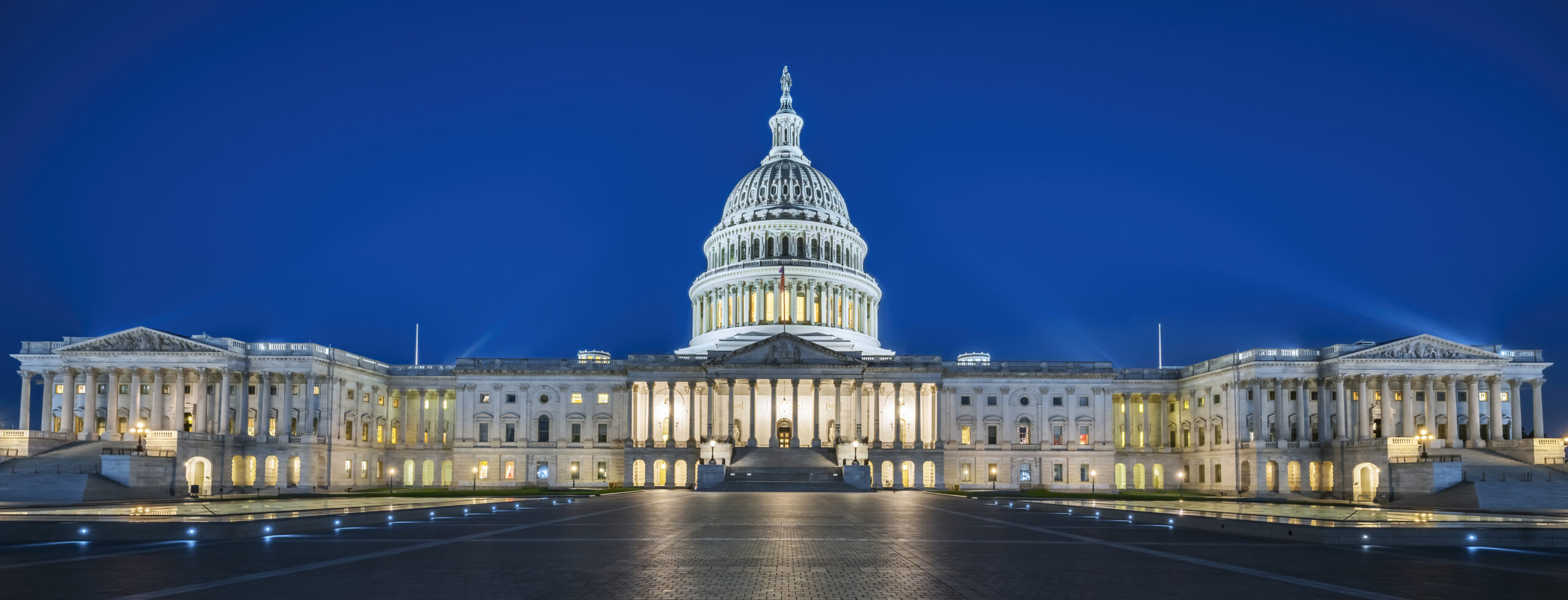
Learn more ↗ Source: Congress.gov See also: Appropriations